Vertex PT Specialists
  • Home
    • Our Story
  • About Us
    • Our Team – Cayce, SC
    • Our Team – Irmo, SC
    • Our Team – Downtown Columbia, SC
    • Outpatient Home Health PT – Midlands, SC
    • Operations Team
    • Coaches
  • Services
    • Physical Therapy   ≚
      • Blood Flow Restriction (BFR)
      • Concussion Management
      • Dry Needling
      • Golf Performance & TPI Assessment
      • Manual Therapy
      • Outpatient Physical Therapy in Your Home
      • Pre and Post-Operative Physical Therapy
      • Running Assessment & Performance Analysis
      • Sports Physical Therapy
      • Women’s Health
    • Performance   ≚
      • Vertex Performance Training
      • Soccer Strength Camps at Vertex Irmo
  • Testimonials
  • Get Started
  • Blog
  • Careers
  • Contact Us
  • Pay Your Bill
  • Menu Menu
  • Link to Facebook
  • Link to Youtube
  • Link to Instagram
pelvic floor, physical therapy

Five Most Common Bladder Irritants In My Personal Diet

So, what are bladder irritants anyways? Bladder irritants are anything that causes the inner liner of the bladder and the muscles of the bladder (mainly the detrusor muscle) to contract, causing a feeling of urgency to empty. In most instances, this isn’t any problem at all. You feel you need to urinate, possibly with some urgency, and you find your way to the restroom. However, in individuals with increased sensitivity to the bladder or urinary tract this can become a symptom that controls their life. Diagnoses such as “Overactive Bladder” (OAB) or Interstitial Cystitis can become extremely frustrating, however these diagnoses aren’t the end-all-be-all. These diagnoses can be controlled with food restrictions/choices, pelvic floor physical therapy, exercise, and cognitive-behavioral changes.

Now, back to the main title – what do I eat/drink the most often that are bladder irritants?

  1. Coffee: I LIVE off coffee. However, the acidity in this drink causes an irritation of the bladder, which leads to a sense of urgency for urination.


  1. Carbonated Beverages: Sodas and carbonated water are bladder irritants, however the reason behind their irritation to the bladder is not well known. In my case, this is carbonated water – I just can’t get enough of the bubbles!


  1. Chili and Spicy Food: The reason behind this irritation is the acidity, which irritates the bladder causing a need to empty (and rid the bladder of this irritation). I love the challenge of not sweating through my clothes when eating spicy foods! Or acting like my mouth is not in complete agony.


  1. Alcohol: This irritant can be caused by the diuretic properties of the solute, which causes more urine to end up in the bladder. Also, the sweeteners and fruit juices that can be combined with alcohol are also bladder irritants. My alcohol of choice? IPAs – hipster or not, the bitterness of the beer and the sweetness of the fruit of choice is delicious.


  1. Acidic Fruits: Tomatoes, oranges, strawberries – all of these fruits have some degree of acidity associated with them. As such, they cause irritation to the bladder liner and urinary tract, which leads to more frequent urination. I eat strawberries/blueberries everyday in my oatmeal and yogurt!

Overall, consuming these foods/drinks won’t cause you to have to run to the restroom. What’s the explanation for that? Solvent! Water! The more water you drink, the more dilute the solution and the less likely your bladder is to become irritated by the acids, sweeteners, and carbonation. The more you understand about your pelvic floor and your digestive system, the better able you are to spot a problem and the better you understand yourself!

If you’re noticing a urinary frequency that is higher than 5-7 times per day, or an inability to control voiding (leakages)– this may be a sign of bladder irritation or pelvic floor dysfunction. At no point is leakage “normal” – regardless of the number of children you’ve carried. If you’re concerned about anything you’ve read or noticed, contact your primary care physician or contact Dr Tristan Faile, PT, DPT at Tristan@vertexpt.com for more information. 

October 4, 2018/0 Comments/by Brandon Vaughn
Share this entry
  • Share on Facebook
  • Share on X
  • Share on Pinterest
  • Share on LinkedIn
  • Share on Reddit
  • Share by Mail
https://vertexpt.com/wp-content/uploads/2018/10/Coffee-Cup.jpg 703 497 Brandon Vaughn http://ecbiz218.inmotionhosting.com/~wwwver6/wp-content/uploads/2017/02/logo-horiz.png Brandon Vaughn2018-10-04 10:38:492018-10-04 20:16:15Five Most Common Bladder Irritants In My Personal Diet
0 replies

Leave a Reply

Want to join the discussion?
Feel free to contribute!

Leave a Reply Cancel reply

Your email address will not be published. Required fields are marked *

Popular
  • Vertex Pump & Run and 5K February 27, 2023 - 8:29 pm
  • South Carolina Governor Meets with Dr. Brandon Vaughn to...February 12, 2025 - 10:14 am
  • Trunk and Core StrengtheningSeptember 24, 2019 - 8:39 pm
  • Electrical Dry Needling for Plantar FasciitisFebruary 28, 2017 - 6:48 pm
Recent
  • 2026 Vertex Pump & Run RecapApril 27, 2026 - 2:50 pm
  • Murph Workout in Columbia, SC | Free Memorial Day Event...April 27, 2026 - 2:24 pm
  • Celebrating 10 Years of VertexApril 8, 2026 - 1:30 pm
  • Men’s Pelvic Floor Physical Therapy in Columbia, SCJanuary 16, 2026 - 1:59 pm
Comments
  • Brandon VaughnThank you Randy. We look forward to seeing you next ye...April 16, 2023 - 9:11 pm by Brandon Vaughn
  • RandyVertex PT did an outstanding job on this event today! ...April 15, 2023 - 11:51 am by Randy
  • Brandon VaughnYes, you may perform your reps in rapid succession, as long...March 26, 2023 - 9:22 pm by Brandon Vaughn
  • DavidCan your reps be done in rapid succesion or do you have...March 26, 2023 - 9:10 pm by David
Tags
athlete barbell bfr body tempering brain brain health calf strain cardio cervicogenic headache columbia concussion crossfit dha dry needling dynamic warmup elbow elbow pain exercise fai front rack golf knee pain low back lumbar spine marathon migraine mild tbi nicotine nutrition omega 3 opex physical therapy plantar fasciitis running running gait running injury sc shin splints shoulder pain south carolina squat strength stress fracture weightlifting wrist pain

Categories

  • acl
  • active release technique
  • art
  • athlete
  • barbell
  • bfr
  • body tempering
  • business
  • cardio
  • cervical spine
  • concussion
  • crossfit
  • dance
  • dry needling
  • elbow
  • endurance
  • exercise
  • fitness
  • geriatric
  • golf
  • hamstring
  • headache
  • hip
  • knee
  • knees
  • labrum
  • low back
  • lumbar spine
  • migraine
  • mtbi
  • neck pain
  • nutrition
  • outpatient home health
  • pain
  • patellar tendinopathy
  • patellofemoral pain
  • pec major
  • pelvic floor
  • peptides
  • physical therapy
  • plantar fasciitis
  • plyometrics
  • podcast
  • rotator cuff
  • running
  • shoulder
  • si joint
  • sleep
  • sports
  • strength
  • Stress Fracture
  • tactical
  • thoracic spine
  • tmd
  • tmj
  • triathlon
  • Uncategorized
  • vertigo
  • weightlifting
  • women
  • wrist

Facebook

Instagram

No images available at the moment

Follow Me!

Vertex PT Specialists Cayce

1105 12th St.
Cayce, SC 29033
Phone 803.973.0100
Fax 803.973.0117
Email: cayce@vertexpt.com

Latest From the Blog

  • 2026 Vertex Pump & Run RecapApril 27, 2026 - 2:50 pm
  • Murph Workout in Columbia, SC | Free Memorial Day Event at Vertex PTApril 27, 2026 - 2:24 pm
  • Celebrating 10 Years of VertexApril 8, 2026 - 1:30 pm

Vertex PT Specialists Irmo

10216 Broad River Road
Irmo, SC 29063
Phone: 803.973.1717
Fax: 803.462.5804
Email: irmo@vertexpt.com

Vertex PT Specialists Laurel St

1825 Laurel Street
(At Carolina CrossFit)
Columbia, SC 29201
Phone: 803.949.5525
Fax: 803.454.9459
Email: info@vertexpt.com

Vertex PT Specialists Outpatient Home Health

Click Here for Information
Phone: 803.973.0100
Fax: 803.462.5805
Email: info@vertexpt.com

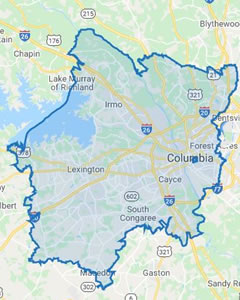
home health area by zipcode
© Vertex PT Specialists, LLC | management by site-image
  • Link to Facebook
  • Link to Youtube
  • Link to Instagram
Link to: Exercise: Add Life to Your Years Link to: Exercise: Add Life to Your Years Exercise: Add Life to Your Years Link to: Not All ACL Injuries Require Surgery: Understanding Your OptionsPictured above is the iconic statue of Mickey Mantle outside of Oklahoma City’s Bricktown Ballpark. Mantle, the legendary New York Yankees outfielder, started his rookie year in 1951. In Game 2 of the World Series that same year, he sustained a right ACL injury that was never reconstructed or repaired. Despite this, Mantle went on to win 3 MVP awards and a Triple Crown in 1956—all without a functional ACL. What does this tell us? Mantle was what we call a “Coper”—someone who can function at a high level despite having a torn ACL. The ACL: Why It Matters The anterior cruciate ligament (ACL) is one of the main stabilizers of the knee joint. Its role is to: Prevent the shin bone (tibia) from sliding forward on the thigh bone (femur) Provide stability for cutting, pivoting, and side-to-side movements ACL tears are common, especially in athletes. One study cites an incidence of 68.6 per 100,000 people. Contact injuries: when another player collides with your knee in a way that ruptures the ligament Non-contact injuries: more common, often from planting and turning, or a hyperextension moment Research suggests up to 75% of ACL ruptures are non-contact. Female athletes are at higher risk due to anatomical, hormonal, and neuromuscular differences. The “Rule of Thirds” After an ACL Tear Recovery after an ACL tear doesn’t look the same for everyone. Experts often use the rule of thirds: One-third can resume normal activities without limitations (copers) One-third require modifications to improve stability One-third need an ACL reconstruction to return to their desired activities Do You Really Need ACL Surgery? The answer depends on your activity goals: Weekend warrior runners: Surgery may or may not be needed, depending on knee stability after rehab. Active parents: If your goal is walking, light exercise, or playing with your kids, you may not need surgery. Competitive athletes: For those who cut, pivot, and jump in high-demand sports, surgery is often required. Why Pre-Hab Matters Pre-habilitation (pre-hab) before surgery—or instead of surgery—is key for better outcomes. Pre-hab focuses on: Reducing swelling Restoring muscle activation and firing Improving movement patterns Setting realistic expectations Many patients find that after pre-hab, they can do everything they want without surgery—meaning they may be a coper. Why See a Physical Therapist First? When an ACL injury happens, your first step should be a consult with a physical therapist. Here’s why: PTs can assess whether you may function without surgery PTs see many post-surgical patients and can recommend trusted orthopedic surgeons if needed PTs can start your recovery immediately, restoring range of motion and function faster PT gives you the best chance at returning to activity—with or without surgery The Bottom Line Not every ACL tear needs surgery. Some people thrive with rehab alone, while others require reconstruction to achieve their goals. Your activity demands, goals, and response to pre-hab should guide the decision. Start with a physical therapist—you’ll get clear guidance, an individualized plan, and a faster path to recovery. References Plutnicki, K. (2014, May 4). Mantle’s Knee Injury Was Just the Start. NY Times Kaplan, Y. Identifying Individuals With an Anterior Cruciate Ligament-Deficient Knee as Copers and Noncopers: A Narrative Literature Review. Journal of Orthopedic and Sports Physical Therapy, 2011; 41(10), 758–766. Boden, B., Sheehan, F., Torg, J., Hewett, T. Non-contact ACL Injuries: Mechanisms and Risk Factors. J Am Acad Orthop Surg, 2010; 18(9): 520–527. Link to: Not All ACL Injuries Require Surgery: Understanding Your OptionsPictured above is the iconic statue of Mickey Mantle outside of Oklahoma City’s Bricktown Ballpark. Mantle, the legendary New York Yankees outfielder, started his rookie year in 1951. In Game 2 of the World Series that same year, he sustained a right ACL injury that was never reconstructed or repaired. Despite this, Mantle went on to win 3 MVP awards and a Triple Crown in 1956—all without a functional ACL. What does this tell us? Mantle was what we call a “Coper”—someone who can function at a high level despite having a torn ACL. The ACL: Why It Matters The anterior cruciate ligament (ACL) is one of the main stabilizers of the knee joint. Its role is to: Prevent the shin bone (tibia) from sliding forward on the thigh bone (femur) Provide stability for cutting, pivoting, and side-to-side movements ACL tears are common, especially in athletes. One study cites an incidence of 68.6 per 100,000 people. Contact injuries: when another player collides with your knee in a way that ruptures the ligament Non-contact injuries: more common, often from planting and turning, or a hyperextension moment Research suggests up to 75% of ACL ruptures are non-contact. Female athletes are at higher risk due to anatomical, hormonal, and neuromuscular differences. The “Rule of Thirds” After an ACL Tear Recovery after an ACL tear doesn’t look the same for everyone. Experts often use the rule of thirds: One-third can resume normal activities without limitations (copers) One-third require modifications to improve stability One-third need an ACL reconstruction to return to their desired activities Do You Really Need ACL Surgery? The answer depends on your activity goals: Weekend warrior runners: Surgery may or may not be needed, depending on knee stability after rehab. Active parents: If your goal is walking, light exercise, or playing with your kids, you may not need surgery. Competitive athletes: For those who cut, pivot, and jump in high-demand sports, surgery is often required. Why Pre-Hab Matters Pre-habilitation (pre-hab) before surgery—or instead of surgery—is key for better outcomes. Pre-hab focuses on: Reducing swelling Restoring muscle activation and firing Improving movement patterns Setting realistic expectations Many patients find that after pre-hab, they can do everything they want without surgery—meaning they may be a coper. Why See a Physical Therapist First? When an ACL injury happens, your first step should be a consult with a physical therapist. Here’s why: PTs can assess whether you may function without surgery PTs see many post-surgical patients and can recommend trusted orthopedic surgeons if needed PTs can start your recovery immediately, restoring range of motion and function faster PT gives you the best chance at returning to activity—with or without surgery The Bottom Line Not every ACL tear needs surgery. Some people thrive with rehab alone, while others require reconstruction to achieve their goals. Your activity demands, goals, and response to pre-hab should guide the decision. Start with a physical therapist—you’ll get clear guidance, an individualized plan, and a faster path to recovery. References Plutnicki, K. (2014, May 4). Mantle’s Knee Injury Was Just the Start. NY Times Kaplan, Y. Identifying Individuals With an Anterior Cruciate Ligament-Deficient Knee as Copers and Noncopers: A Narrative Literature Review. Journal of Orthopedic and Sports Physical Therapy, 2011; 41(10), 758–766. Boden, B., Sheehan, F., Torg, J., Hewett, T. Non-contact ACL Injuries: Mechanisms and Risk Factors. J Am Acad Orthop Surg, 2010; 18(9): 520–527. Not All ACL Injuries Require Surgery: Understanding Your OptionsPictured above...
Scroll to top Scroll to top Scroll to top
Have a question?

[contact-form-7 id=”2108″ title=”Contact popup”]